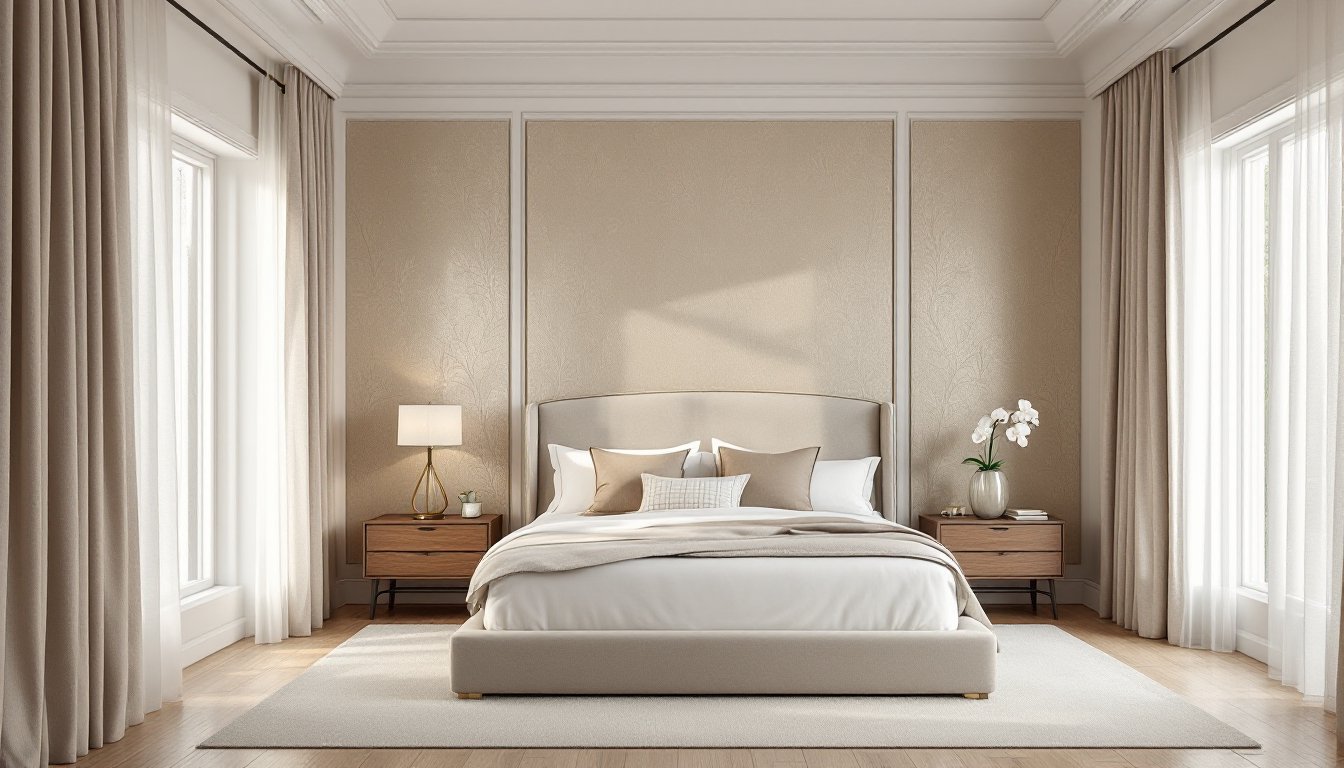
Bedrooms deserve more than builder-grade paint. Luxury wallpaper brings texture, depth, and character that flat walls can’t match, turning a sleep space into a retreat that feels custom-designed. Whether it’s a fabric-backed silk that catches morning light or a deeply embossed pattern that adds architectural interest, high-end wall coverings offer visual impact that paint alone won’t deliver. The bedroom wallpaper market in 2026 leans toward tactile surfaces, natural materials, and statement designs that anchor the room. This guide walks through material types, installation considerations, and how to choose coverings that’ll last beyond the next trend cycle.
Table of Contents
ToggleKey Takeaways
- Luxury wallpaper for bedroom offers superior durability, sound dampening, and wall imperfection coverage compared to paint, lasting 10-15 years versus the typical 3-5 year repaint cycle.
- Grasscloth, embossed papers, and textile wallcoverings dominate 2026 trends, with prices ranging from $80–$400 per roll depending on material quality and installation requirements.
- Light conditions, architectural features, and backing type must guide your selection—north-facing rooms need cooler palettes with reflective elements, while humid spaces require non-woven or vinyl-backed papers.
- Professional wall preparation, including removal of old wallpaper, joint compound filling, and alkyd-based priming, is non-negotiable for luxury wallpaper success.
- Use the paste-the-wall method with manufacturer-specified adhesive and allow 48 hours for curing; hire professionals for papers over $200/roll or complex patterns to avoid costly installation errors.
- Always order and evaluate sample sheets in your actual room lighting for a full week before committing, as colors and textures shift dramatically under different light conditions.
Why Choose Luxury Wallpaper for Your Bedroom?
Luxury wallpaper isn’t just about aesthetics, it’s a functional upgrade. Premium materials offer better durability, sound dampening, and light control compared to standard paper-backed options. Fabric-backed vinyl, grasscloth, and silk-screened papers hold up to humidity shifts without peeling or bubbling, especially in primary bedrooms with attached baths.
High-quality coverings hide wall imperfections better than paint. That textured linen weave or embossed pattern masks minor drywall flaws, uneven mudding, or old repair patches. If the walls aren’t perfectly smooth, common in older homes, a heavyweight wallpaper (minimum 20 oz per square yard) provides coverage without telegraphing every flaw.
Sound absorption is another practical benefit. Textile-based papers and grasscloths dampen noise better than drywall alone, helpful if the bedroom shares a wall with a bathroom, hallway, or busy living area. It’s not soundproofing, but it takes the edge off ambient noise.
Luxury wallpaper also offers longevity. Quality materials from established mills, Phillip Jeffries, Schumacher, or de Gournay, last 10-15 years with proper care. That’s significantly longer than the 3-5 year repaint cycle most bedrooms require. Upfront cost is higher, but lifecycle value beats multiple rounds of primer and paint.
Top Luxury Wallpaper Styles and Trends for Bedrooms
Textured and Embossed Designs
Grasscloth remains the go-to for organic texture. Made from natural fibers like jute, sisal, or arrowroot mounted on paper backing, it brings depth without pattern. Each roll varies slightly in color and texture, that’s a feature, not a flaw. Expect to pay $80-$200 per roll (covering roughly 72 square feet). Seams are visible with grasscloth: it’s part of the aesthetic. If that bothers you, choose a different material.
Embossed papers add dimensional pattern through raised designs pressed into heavyweight paper or vinyl. Look for coverings with at least 1/8-inch relief for noticeable depth. These work well behind headboards or on accent walls where the texture can catch light and create shadow play. They’re easier to install than grasscloth since seams are less obvious, and most are washable, useful if the bedroom doubles as a workspace.
Textile wallcoverings made from actual fabric laminated to backing paper offer the richest texture but require pro installation. They’re not DIY-friendly: the material doesn’t tolerate repositioning, and seams must be perfect. Budget $150-$400 per roll plus installation.
Metallic and Silk Finishes
Metallic inks and foil accents reflect light, making small bedrooms feel larger. They work best on accent walls or in rooms with controlled natural light, too much direct sun creates glare. Modern metallics use mica particles or metal leaf rather than reflective foil, giving subtle shimmer instead of disco-ball shine. Installing luxury papers with metallic finishes requires paste with low water content: excessive moisture causes the metallic layer to bubble or tarnish.
Silk-screened papers use hand-applied ink layers for depth standard printing can’t match. Colors appear richer, and the slight variation between panels adds handcrafted character. These papers are delicate, no scrubbing, and installation requires a clear adhesive (not standard wheat paste) to prevent staining. Most manufacturers specify “dry hanging” methods where paste goes on the wall, not the paper.
Both finishes show every wall imperfection. If the substrate isn’t smooth, apply lining paper first, a blank, heavyweight paper that creates an even surface. It’s an extra step, but it prevents the metallic or silk finish from highlighting every drywall seam or texture.
How to Select the Perfect Luxury Wallpaper for Your Bedroom
Start with light conditions. North-facing bedrooms get cool, indirect light that mutes warm tones, gold metallics look brassy, and warm beiges read flat. Choose cooler palettes or papers with reflective elements to bounce available light. South-facing rooms handle richer, deeper colors without feeling cave-like.
Consider the room’s architectural features. If the bedroom has crown molding, wainscoting, or built-ins, the wallpaper should complement, not compete with, those details. Busy patterns overwhelm rooms with lots of trim: subtle textures or tone-on-tone designs let the architecture lead. In minimalist spaces with flat walls, bold patterns have room to shine.
Match the backing type to your walls. Rooms with exterior walls or in humid climates need non-woven or vinyl-backed papers that handle moisture swings. Interior walls in climate-controlled spaces can use natural-backed papers. If the bedroom shares a wall with a bathroom, skip natural-fiber coverings unless there’s excellent ventilation.
Sample before committing. Order sample sheets (most suppliers offer 8×10 or larger) and live with them for a week. View samples in morning and evening light, next to bedding, and against furniture. Colors shift dramatically depending on light sources. What looks elegant in the showroom might read too dark or too bright in your actual space.
Pattern scale matters. Large-scale patterns (repeats over 24 inches) work in spacious bedrooms with high ceilings. In standard 10×12 bedrooms, they feel overwhelming. Opt for medium repeats (12-24 inches) or small-scale textures. Architectural elements within luxury house plans often dictate scale considerations, higher ceilings and larger rooms handle bolder patterns.
Calculate material needs accurately. Measure wall height and width, then add 10% for waste and pattern matching. Luxury papers with large repeats generate more waste, sometimes 20-25%, because each strip must align. A bedroom typically needs 4-6 double rolls (covering approximately 56 square feet per double roll) depending on ceiling height and pattern repeat.
Installation Tips for Luxury Wallpaper
Wall prep is non-negotiable. Strip old wallpaper completely, no layering. Remove every scrap of backing paper and residual adhesive with a wallpaper remover solution and scraper. Let walls dry 24 hours minimum.
Fill all holes, cracks, and dents with joint compound. Sand smooth with 120-grit paper, then prime with alkyd-based primer (oil-based). It seals the surface and prevents the drywall from pulling moisture from the wallpaper adhesive too quickly. Latex primer can work but isn’t ideal for luxury papers, it raises the grain of natural fibers. If walls have texture, consider skim-coating with joint compound to create a flat surface, then prime again.
Use manufacturer-specified adhesive. High-end papers often require specific pastes, heavy-duty clear adhesive for grasscloth, clay-based paste for traditional papers, or pre-mixed vinyl adhesive for coated backings. Don’t substitute standard wheat paste: it won’t hold heavyweight materials and can stain delicate finishes.
Most luxury wallpapers use the paste-the-wall method rather than pasting the paper itself. This prevents oversaturation and reduces drying time. Roll adhesive onto the wall in sections slightly wider than the paper width, then apply the dry paper. It’s more forgiving and allows slight repositioning.
Start in the least visible corner, usually behind the door. Use a laser level to mark a plumb line: don’t trust corner walls to be straight (they rarely are). Hang the first strip to the plumb line, not the corner. Overlap corners slightly rather than trying to butt seams exactly in the corner: it hides gaps when walls are out of square.
For textured papers like grasscloth, don’t use a seam roller, it crushes the fibers. Instead, gently press seams with a clean, dry sponge. Wipe away adhesive immediately with a damp (not wet) sponge. Adhesive sets fast on natural fibers and becomes nearly impossible to remove once dry.
Cut around outlets and switches with a sharp utility knife, replacing the blade every few cuts. Dull blades tear delicate papers. Turn off power at the breaker before trimming around electrical boxes.
Plan for pro installation if the paper costs more than $200/roll, has a large pattern repeat, or uses delicate materials like silk or hand-painted designs. Installation mistakes on luxury papers are expensive to fix. If handling it yourself, practice with a lower-cost paper in a closet or behind furniture first.
Allow 48 hours for the adhesive to cure fully before moving furniture against walls. Some adhesives off-gas during curing and can affect finishes on wood furniture if placed too soon. Many designers working with comprehensive luxury interior ideas recommend this waiting period as standard practice.
Conclusion
Luxury wallpaper transforms bedrooms from functional sleep spaces into designed environments with staying power. Choose materials based on light conditions, wall substrates, and maintenance tolerance, not just pattern appeal. Proper surface prep and adhesive matching matter more than installer skill: even DIYers can achieve clean results if walls are prepped correctly. For high-stakes materials or complicated patterns, the cost of professional installation is cheaper than replacing ruined expensive paper.