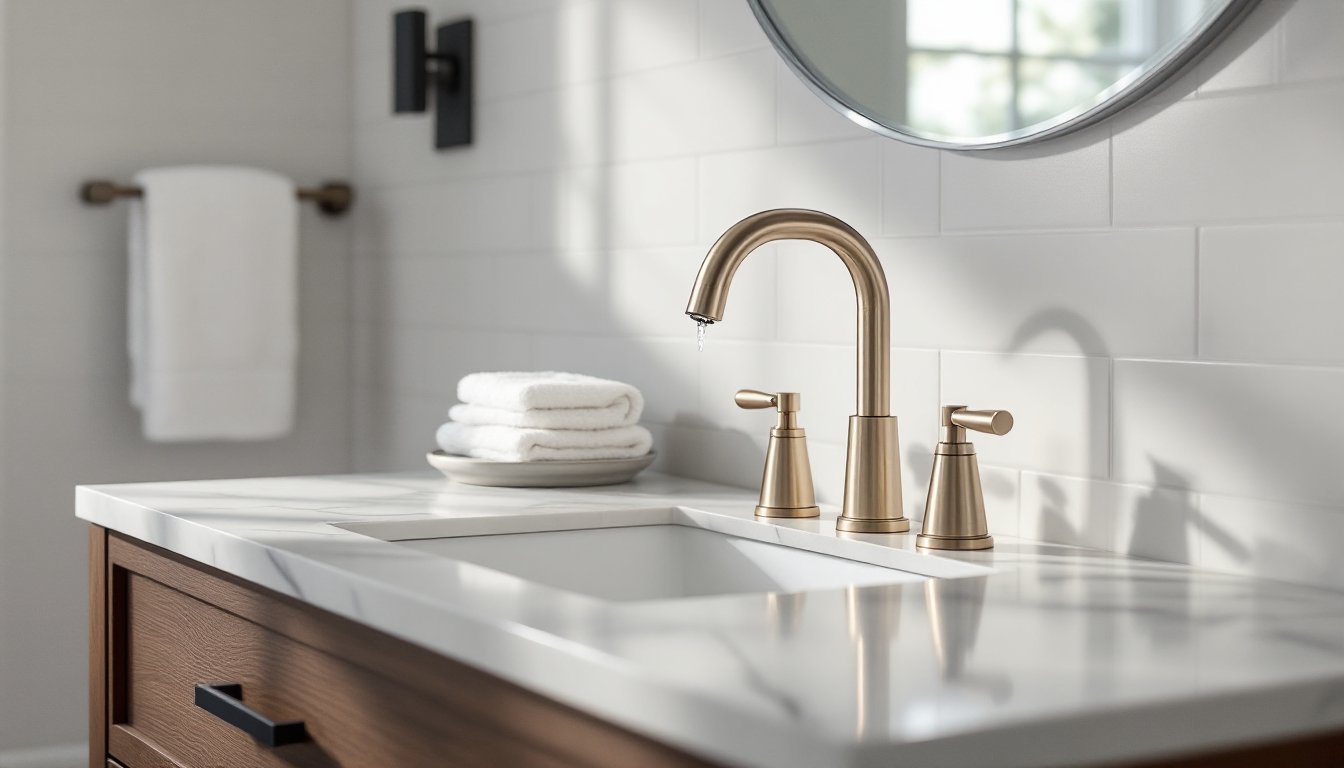
Swapping out builder-grade hardware for premium fixtures is one of the fastest, most visible upgrades a homeowner can make. Luxury bathroom hardware doesn’t just elevate the look of a vanity or shower, it changes how the space feels every time someone turns a faucet or pulls a towel bar. The weight, finish, and engineering behind high-end pieces communicate quality in a way that budget hardware simply can’t match. For DIYers ready to move beyond basic renovations, investing in the right fixtures offers both immediate visual impact and long-term durability.
Table of Contents
ToggleKey Takeaways
- Luxury bathroom hardware elevates both aesthetics and functionality through superior materials like solid brass and stainless steel, durable finishes like PVD coatings, and valve systems rated for 500,000+ cycles compared to budget alternatives.
- Premium finishes such as brushed nickel, polished chrome, matte black, and oil-rubbed bronze offer distinct visual and maintenance characteristics; choose based on your design style and willingness to maintain the finish regularly.
- Focus your upgrade budget on high-impact pieces including widespread faucets, thermostatic shower systems, and quality towel bars that anchor the vanity and provide the most visible return on investment.
- Proper installation of luxury bathroom hardware requires precision, manufacturer-specific torque specs, stud-anchored mounting for towel bars, and braided stainless supply lines to protect your investment and prevent costly leaks.
- Match hardware finishes to your home’s architectural style—traditional designs suit oil-rubbed bronze and cross handles, while contemporary spaces benefit from matte black and geometric forms—and always test functionality in showrooms before purchasing.
What Sets Luxury Bathroom Hardware Apart
Luxury bathroom hardware distinguishes itself through three core factors: material quality, construction methods, and functional longevity. While budget fixtures often use hollow brass or zinc alloy bodies with thin plating, premium hardware relies on solid brass construction or high-grade stainless steel that resists corrosion and maintains finish integrity for decades.
The difference becomes obvious in hand. High-end faucets feature ceramic disc valve cartridges rated for 500,000+ cycles, compared to compression valves in economy models that wear out in a fraction of that time. Lever handles operate with smooth, precise resistance, no wiggle, no play. Towel bars mount with concealed fasteners and reinforced brackets designed to handle actual use, not just pass a showroom glance.
Finish work separates the tiers as well. Premium manufacturers apply Physical Vapor Deposition (PVD) finishes or multiple layers of electroplating that bond at the molecular level. These treatments resist scratching, tarnishing, and the chemical assault of daily cleaners far better than spray-applied coatings. Warranties reflect this confidence: luxury lines often carry lifetime guarantees on both finish and function, while budget options cap out at one to five years.
Another hallmark is design coherence. Luxury collections offer complete suites, faucets, showerheads, towel bars, robe hooks, toilet paper holders, all engineered with matching proportions, curves, and finishes. This consistency makes coordinating a bathroom straightforward, eliminating the guesswork that comes with mixing disparate product lines.
Top Materials for High-End Bathroom Fixtures
Material choice drives both the aesthetic and performance of luxury bathroom hardware. The right material withstands humidity, temperature swings, and daily wear without sacrificing style.
Solid brass remains the gold standard for internal components and body construction. It machines cleanly, resists dezincification (a common failure mode in lesser alloys), and provides the heft that signals quality. Most premium faucets and shower valves use brass cores even when the exterior finish suggests another metal.
Stainless steel offers unmatched corrosion resistance, especially in coastal or high-humidity environments. Marine-grade 316 stainless outperforms standard 304 in salt-air conditions, though both exceed the longevity of plated finishes. Stainless hardware works particularly well in modern or industrial design schemes where its natural luster complements glass and stone.
Brushed Nickel and Polished Chrome
Brushed nickel dominates the mid-to-high-end market for good reason. The satin finish hides water spots and fingerprints better than polished surfaces, making it practical for high-traffic bathrooms. Quality brushed nickel uses a PVD coating over solid brass, creating a durable surface that won’t flake or corrode. It pairs well with both warm and cool color palettes, bridging traditional and contemporary styles without visual conflict.
Polished chrome delivers a mirror-like finish that reflects light and amplifies brightness in smaller bathrooms. The chrome plating process, when done properly, involves multiple layers including copper and nickel undercoats before the final chromium layer. This build-up provides exceptional hardness and scratch resistance. Chrome requires more frequent cleaning to maintain its shine, but the tradeoff is a crisp, timeless look that complements white fixtures and marble surfaces beautifully.
Matte Black and Oil-Rubbed Bronze
Matte black hardware has surged in popularity over the past few years, and premium versions use powder-coated or PVD-applied black finishes rather than paint. The flat surface creates strong visual contrast against white tile, marble, or light-colored cabinetry. Designers often specify matte black in bathrooms featuring clean lines and minimalist aesthetics, where the fixtures function almost as sculpture. Water spots show less on matte surfaces than on gloss, but the finish does reveal soap residue, so regular wiping maintains the look.
Oil-rubbed bronze brings warmth and depth through its hand-applied finish that darkens brass with controlled oxidation. The living finish actually improves with age, high-touch areas like lever handles develop a natural patina that highlights use patterns. Oil-rubbed bronze suits traditional, transitional, and rustic design schemes, and it pairs particularly well with natural stone, wood vanities, and earth-tone palettes. Some homeowners appreciate that this finish forgives minor scratches by blending them into the existing texture, unlike chrome or polished nickel where every mark stands out.
Essential Luxury Hardware Pieces to Upgrade Your Bathroom
Not every fixture carries equal visual weight. Prioritizing a few key pieces delivers maximum impact without requiring a complete gut renovation.
Widespread faucets anchor the vanity and set the tone for the entire space. A luxury widespread faucet features separate hot and cold handles mounted on an 8-inch center spacing, with the spout as an independent component. This configuration allows for dramatic high-arc spouts and substantial lever or cross handles that feel solid in hand. Look for models with side-mounted aerators that maintain water pressure while conserving flow, premium faucets typically hit the EPA WaterSense standard of 1.2 gallons per minute without feeling weak.
Shower systems represent the most tactile upgrade. A premium system might include a ceiling-mounted rain head (10 to 12 inches square), a handheld wand on a slide bar, and body jets, all controlled through a thermostatic valve that maintains temperature within ±2°F. Thermostatic valves cost more than pressure-balancing types but prevent scalding even when toilets flush or washing machines draw water elsewhere in the house. Rough-in dimensions for these systems differ from standard single-head setups, so plan installations during renovation phases, not as simple swaps.
Towel bars and rings in luxury lines use hidden mounting hardware and solid brass construction that won’t sag or rotate over time. The difference between a builder-grade towel bar and a premium one becomes obvious after a year, cheap bars bend, mounts loosen, and finishes wear at contact points. High-end bars often measure 24 inches or longer and mount to wall studs or use commercial-grade hollow-wall anchors rated for 50+ pounds. Designers working on upscale home decor ideas increasingly treat towel bars as architectural elements, selecting oversized or geometrically striking pieces that function as visual punctuation.
Cabinet hardware, drawer pulls and door knobs, might seem secondary, but in bathrooms with large vanities, these small pieces multiply across the visual field. Luxury cabinet hardware uses solid metal construction with consistent finish quality across every piece in a set. Backplates add formality and protect cabinet faces from hand oils. Standard center-to-center spacing for pulls runs 3 to 5 inches, but oversized pulls at 6 inches or more create a bold, modern statement.
How to Choose Hardware That Matches Your Design Vision
Selecting luxury hardware requires balancing personal taste with functional constraints and design principles that prevent the space from feeling disjointed.
Start by auditing existing fixtures. Note the finish on lighting, mirrors, and any hardware staying in place. Mixing metals can work, pairing warm brass faucets with cool chrome lighting creates intentional contrast, but it requires confidence and a unifying element like consistent shapes or proportions. For most homeowners, sticking to one or two metal finishes across all hardware simplifies decisions and ensures cohesion.
Consider the architectural style of the home. Traditional homes with crown molding and wainscoting call for hardware with classical proportions, cross handles, decorative escutcheons, curves over angles. Contemporary spaces benefit from geometric forms, minimal ornamentation, and industrial materials like stainless or matte black. Transitional bathrooms sit between these extremes, allowing homeowners to blend a traditional oil-rubbed bronze finish with modern cylindrical lever handles.
Scale matters more than most DIYers realize. A petite powder room overwhelms with a massive 12-inch rain head, while a spacious master bath makes a standard 6-inch showerhead look undersized. Measure the vanity width and multiply by 0.3 to estimate appropriate faucet spread for visual balance. For towel bars, allow at least 2 inches of clearance on each side of a folded towel to avoid cramped, bunched fabric.
Test functionality before committing to a design. Visit showrooms and operate display models. Lever handles require less grip strength than knobs, an important consideration for aging-in-place renovations. Wall-mounted faucets free up counter space but require precise rough-in measurements, off by half an inch means the spout doesn’t align with the drain. Homeowners exploring interior design ideas often find that photos don’t convey the ergonomic reality of using a fixture daily.
Finally, plan for maintenance. Polished finishes demand regular cleaning to prevent spotting. Living finishes like oil-rubbed bronze evolve with use, which some find charming and others find unsettling. PVD-coated matte black resists wear but shows soap film. Match your willingness to maintain the finish with your lifestyle, don’t choose chrome if you hate polishing.
Installation Tips for Premium Bathroom Hardware
Installing luxury hardware demands more precision than slapping up builder-grade fixtures, but the process remains accessible for competent DIYers with the right tools and patience.
Read the manufacturer’s instructions completely before starting. Premium fixtures often include specific torque specs, gasket orientations, or assembly sequences that differ from generic installations. Ignoring these steps can void warranties or cause leaks that damage the fixture and surrounding materials.
For faucet installations, always replace supply lines even if existing ones look fine. Braided stainless lines rated for 125 psi cost a few dollars and eliminate a common failure point. Use plumber’s tape on threaded connections but avoid over-tightening, brass fittings crack under excessive torque. Hand-tight plus one quarter-turn with a wrench is usually sufficient. If the faucet requires a deck plate or escutcheon, apply a thin bead of clear silicone underneath to prevent water intrusion without creating a permanent bond.
Shower valve rough-ins require accuracy. Thermostatic valves need to sit plumb and level within 1/8 inch, or the trim plate won’t sit flush against the tile. Mark stud locations before tiling and use blocking between studs to anchor the valve securely. Remember that finished wall thickness, cement board plus tile plus thinset, affects trim depth. Most premium valves include adjustable depth adapters, but measure twice to avoid discovering the trim doesn’t reach after tile goes up.
For towel bars and accessories, locate studs whenever possible. A towel bar anchored into studs with #10 wood screws will outlast any hollow-wall anchor, no matter how heavy-duty the packaging claims. If studs don’t align with your layout, use toggle bolts rated for at least 50 pounds per anchor. Drill pilot holes to prevent tile cracking, and use masking tape over the drill site to keep the bit from wandering on glazed surfaces. Many modern designs resembling enamel bath accessories require concealed mounting, so dry-fit the piece before drilling final holes.
When installing cabinet hardware, create a drilling template from cardboard or scrap wood to ensure consistent placement across multiple doors and drawers. Drill from the face side through to the back, supporting the door with scrap underneath to prevent tear-out. For pulls with two mounting screws, measure center-to-center distance exactly, off by even 1/16 inch and the pull won’t sit straight.
Safety note: Always shut off water at the fixture shutoff valves or main supply before starting plumbing work. Keep a bucket and towels handy for residual water in lines. Wear safety glasses when drilling tile or stone, as chips can fly at eye level. If the installation involves moving supply or drain lines, or if the work affects walls shared with other rooms, check local code requirements, some jurisdictions require permits even for fixture replacement.