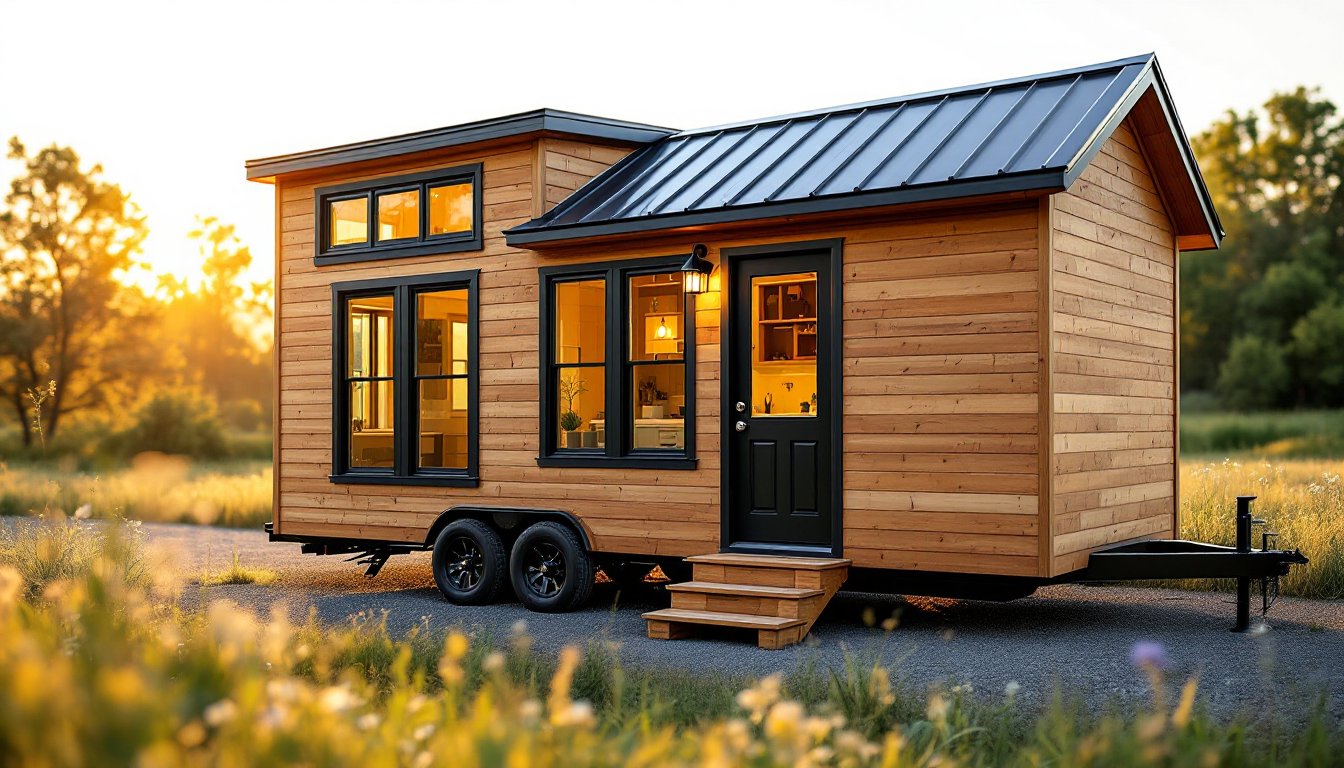
The tiny house movement has evolved far beyond bare-bones minimalism. Today’s luxury tiny houses blend premium craftsmanship, smart technology, and upscale finishes into footprints typically ranging from 100 to 400 square feet. These aren’t glorified sheds, they’re thoughtfully engineered homes that prove square footage doesn’t dictate quality of life. Whether someone’s downsizing from a traditional home, seeking a backyard guesthouse, or building an off-grid retreat, luxury tiny houses deliver comfort without compromise. This guide breaks down what separates high-end models from budget builds, where the money goes, and what design strategies make compact spaces feel genuinely luxurious.
Table of Contents
ToggleKey Takeaways
- Luxury tiny houses range from $80,000 to $180,000 and feature premium materials, smart technology, and engineered structural upgrades that rival high-end traditional construction.
- High-value investments for luxury tiny houses include solar arrays with battery banks, composting toilets, and European-style compact appliances that maximize both functionality and space.
- Vertical storage, dormer lofts with 5+ feet of headroom, and concealed storage solutions are essential design strategies that make luxury tiny houses feel spacious and uncluttered.
- Professional builders like New Frontier Tiny Homes, Timbercraft Tiny Homes, and Alpine Tiny Homes offer full customization with options for off-grid capability and high-end finishes.
- Interior design in luxury tiny houses prioritizes neutral color palettes, layered lighting, material consistency, and selective décor—proving that quality execution matters more than square footage.
What Defines a Luxury Tiny House?
A luxury tiny house isn’t just small, it’s deliberately engineered for comfort, durability, and aesthetics at a level that rivals traditional high-end construction. The line between “standard” and “luxury” hinges on material quality, craftsmanship, and integrated systems that go beyond code minimums.
Structurally, luxury models often use steel chassis rated for highway towing (10,000+ lb GVWR) instead of lighter utility trailer frames. Wall framing typically consists of 2×6 studs instead of 2x4s, providing better insulation values (R-19 to R-21 in walls, R-38+ in ceilings). Exterior cladding might include cedar shiplap, fiber cement panels, or metal standing-seam roofing rather than vinyl siding.
Mechanical systems separate luxury builds from basic shells. Expect mini-split HVAC units (12,000+ BTU) with zone control, tankless water heaters (propane or electric), and whole-house water filtration. Electrical panels are typically 100-amp service with smart breakers, supporting induction cooktops, washer/dryer combos, and multiple high-draw appliances simultaneously.
The distinguishing factor is customization. Luxury builders offer architectural design services, engineered plans stamped by licensed professionals, and finishes chosen by the buyer, not pulled from a catalog. Many models meet IRC Appendix Q standards or exceed them, making them eligible for financing and permanent foundation installation in jurisdictions that recognize tiny houses as dwellings.
Premium Materials and Finishes
Materials make or break the luxury designation. Countertops in high-end tiny houses typically feature quartz slabs (Caesarstone, Cambria) or butcher block hardwood (maple, walnut) rather than laminate. Cabinetry is plywood construction with dovetail joints and soft-close hardware, often custom-built to maximize every inch.
Flooring choices lean toward engineered hardwood (7-9mm wear layer), luxury vinyl plank (6mm+ with rigid core), or porcelain tile in wet areas. These materials handle the flex and movement inherent in a structure on wheels better than solid hardwood, which can gap or crack.
Fixtures and hardware matter. Luxury builds incorporate low-flow fixtures from brands like Kohler or Delta, brushed nickel or matte black finishes, and composite granite sinks. Shower surrounds might be Schluter-installed tile with waterproof membranes, not fiberglass inserts. Windows are dual-pane low-E glass in vinyl or fiberglass frames, often casement or awning styles for superior sealing and ventilation.
High-End Features Worth the Investment
Certain upgrades deliver outsized value in a tiny house, either by improving livability, extending lifespan, or increasing resale appeal. Not every luxury feature is worth the cost, but these consistently prove their value.
Composting or incinerating toilets eliminate the need for septic hookups and reduce water use. Models like the Nature’s Head or Incinolet cost $900–$2,500 but provide true off-grid capability. For on-grid builds, a standard low-flow toilet (1.28 GPF) with a macerator pump allows flexible bathroom placement without relying on gravity drainage.
Solar arrays (2-4 kW) paired with lithium battery banks (10-20 kWh) enable off-grid living or drastically cut utility costs. Expect $8,000–$15,000 installed, depending on capacity. Grid-tied systems with net metering are simpler and cheaper but require utility cooperation.
Appliance packages designed for small spaces, like 24-inch induction ranges, 18-inch dishwashers (Bosch, Miele), and European-style combo washer/dryers, cost more upfront but integrate seamlessly. A standard 30-inch range eats precious counter space: a 24-inch model with four burners and a convection oven performs identically in a fraction of the footprint.
Multi-functional furniture isn’t always custom. Murphy beds with integrated desks, lift-top coffee tables with storage, and modular seating systems from companies like Resource Furniture deliver flexibility without the lead time of bespoke millwork. Budget $3,000–$8,000 for quality transforming pieces.
Smart home integration, Wi-Fi thermostats, app-controlled lighting (Lutron Caseta, Philips Hue), and remote monitoring systems, adds $1,500–$3,000 but makes managing a small space effortless. Voice control and automation reduce the need for multiple switches and dials in tight quarters.
Smart Design Solutions for Upscale Small Spaces
Luxury in a tiny house isn’t about cramming in features, it’s about thoughtful spatial design that makes 300 square feet feel generous. The best builders and designers rely on tested strategies that maximize usable area without sacrificing aesthetics.
Vertical storage is non-negotiable. Upper cabinets should extend to the ceiling (8–10 feet in most tiny houses), capturing dead space. Open shelving works in kitchens if styled intentionally: closed cabinetry keeps visual clutter down. Toe-kick drawers under base cabinets add 4–6 inches of hidden storage for flat items like baking sheets or cutting boards.
Loft design separates budget builds from luxury models. Standard lofts are 3.5–4 feet tall, requiring crawling. Luxury designs feature dormer lofts or raised rooflines that provide 5+ feet of headroom, allowing someone to sit upright in bed. Staircases with integrated storage (each tread a drawer) beat ladders for safety and usability, though they consume 16–20 square feet of floor space.
Sight lines and light make small spaces breathable. Large windows (at least 15% of wall area) on multiple exposures prevent cave-like interiors. Transom windows above doors and cabinets borrow light between zones. Reflective surfaces, glass tile backsplashes, glossy cabinet fronishes, and mirrors, amplify natural light without adding fixtures.
Concealed storage maintains clean lines. Pocket doors save swing clearance (a standard door needs 9 square feet of arc). Recessed medicine cabinets, in-wall shelving between studs, and under-stair closets capture space that would otherwise be wasted. Built-in benches with lift-top seats provide seating and storage in one footprint.
Those interested in small luxury homes often find that these same design principles apply at slightly larger scales, proving the strategies work across compact footprints.
Cost Breakdown: What to Expect When Building Luxury Tiny
Luxury tiny houses typically range from $80,000 to $180,000 turnkey, or $300–$600 per square foot, comparable to high-end traditional construction. DIY builds can cut costs by 30–50%, but require significant skill and time.
Shell and structure (trailer, framing, sheathing, roofing, windows, doors): $25,000–$45,000. A custom steel trailer alone runs $4,000–$8,000. Engineered plans from a licensed architect or structural engineer add $2,000–$5,000 but are essential for permits and financing.
Mechanical systems (plumbing, electrical, HVAC): $12,000–$22,000. Hiring licensed electricians and plumbers isn’t optional in most jurisdictions. Permits vary wildly, some counties treat tiny houses on wheels as RVs (minimal permitting), others require full IRC compliance ($1,500–$3,000 in fees).
Interior finishes and fixtures (flooring, cabinetry, countertops, appliances, tile, paint): $20,000–$40,000. Custom cabinetry is the single biggest line item here: semi-custom or IKEA hacks can save $5,000–$10,000 without sacrificing quality if assembled carefully.
Furnishings and technology (furniture, smart home, solar, composting toilet): $8,000–$25,000. This is where buyers often underestimate costs. A quality sofa, mattress, and dining set designed for small spaces can easily hit $6,000.
Labor for professional builds: $15,000–$40,000, depending on regional rates and project complexity. Builders in high-cost markets (Pacific Northwest, Northeast) charge more. Those exploring luxury house plans for traditional homes will notice tiny houses don’t offer proportional savings, the per-square-foot cost is higher due to customization and specialized construction.
Financing remains tricky. Most lenders won’t mortgage a structure on wheels. RV loans (10–15 years, 5–8% APR) or personal loans are common. Tiny houses on permanent foundations may qualify for conventional mortgages if they meet local codes.
Top Luxury Tiny House Builders and Designers
Several builders have established reputations for quality, customization, and attention to detail. These aren’t kit sellers, they’re fabricators who treat each build as a custom project.
New Frontier Tiny Homes (Nashville, TN) specializes in modern farmhouse and contemporary designs with full customization. Expect $95,000–$150,000 for turnkey models, often featuring shiplap interiors, quartz counters, and high-end appliances. They offer financing partnerships and deliver nationwide.
Timbercraft Tiny Homes (Guntersville, AL) builds on premium trailers with options for off-grid packages (solar, composting toilets, tankless propane systems). Their models range from $75,000 to $130,000, with a focus on rustic luxury, reclaimed wood, copper fixtures, and timber-frame details.
Incredible Tiny Homes (Morristown, TN) offers both standard models and fully custom builds. Pricing starts around $85,000. They’re known for structural upgrades (spray foam insulation, metal roofing, upgraded windows) and transparent pricing breakdowns.
Alpine Tiny Homes (Meridian, ID) caters to clients seeking high-design interiors. Many models feature luxury living spaces that incorporate European fixtures, underfloor heating, and smart home systems. Budget $120,000+ for their flagship models.
DIY builders looking for inspiration can explore designs featured in sources like Architectural Digest’s tiny house showcase, which highlights innovative layouts and material choices. Elle Decor’s tiny house gallery offers additional examples of high-end finishes in compact footprints.
Always verify builder licensing, request references, and inspect completed models in person. A $120,000 purchase deserves the same due diligence as a traditional home.
Interior Design Inspiration for Elevated Tiny Living
Interior design in a luxury tiny house demands restraint. Every element should serve a purpose, visual or functional. The goal is curated, not cluttered.
Color palettes lean light and neutral. Whites, grays, and soft taupes expand visual space. Accent colors work best in small doses, a navy backsplash, terracotta textiles, or black window frames. Monochromatic schemes with varied textures (linen, wool, matte tile) add depth without chaos.
Lighting layers create mood and function. Recessed LED downlights (3-inch cans, 3000K color temperature) provide ambient light. Under-cabinet strips illuminate work surfaces. Pendant fixtures over dining or kitchen islands add visual interest without consuming floor space. Dimmer switches are essential: harsh overhead lighting kills ambiance.
Material consistency ties spaces together. If the kitchen features walnut cabinetry, repeat walnut in the bathroom vanity or stair treads. Limit finishes to three metals (e.g., matte black, brushed nickel, oil-rubbed bronze) and three main materials (e.g., white oak, marble-look quartz, matte white tile).
Textiles and soft goods humanize small spaces. A wool area rug anchors the living zone. Linen curtains soften windows (avoid heavy drapes that overwhelm). Throw pillows and blankets in natural fibers add warmth. Keep patterns minimal, one patterned element per area maximum.
Art and decor should be selective. One large piece makes more impact than a gallery wall in a tiny house. Floating shelves display 3–5 curated objects, not collections. Plants work if natural light supports them: faux plants read cheap in luxury builds.
Readers can find additional small-space styling tips at Apartment Therapy, which covers compact living strategies and budget-friendly upgrades. Those browsing luxury real estate listings will notice similar design principles applied in high-end condos and studios, proof that luxury isn’t about size, but execution.