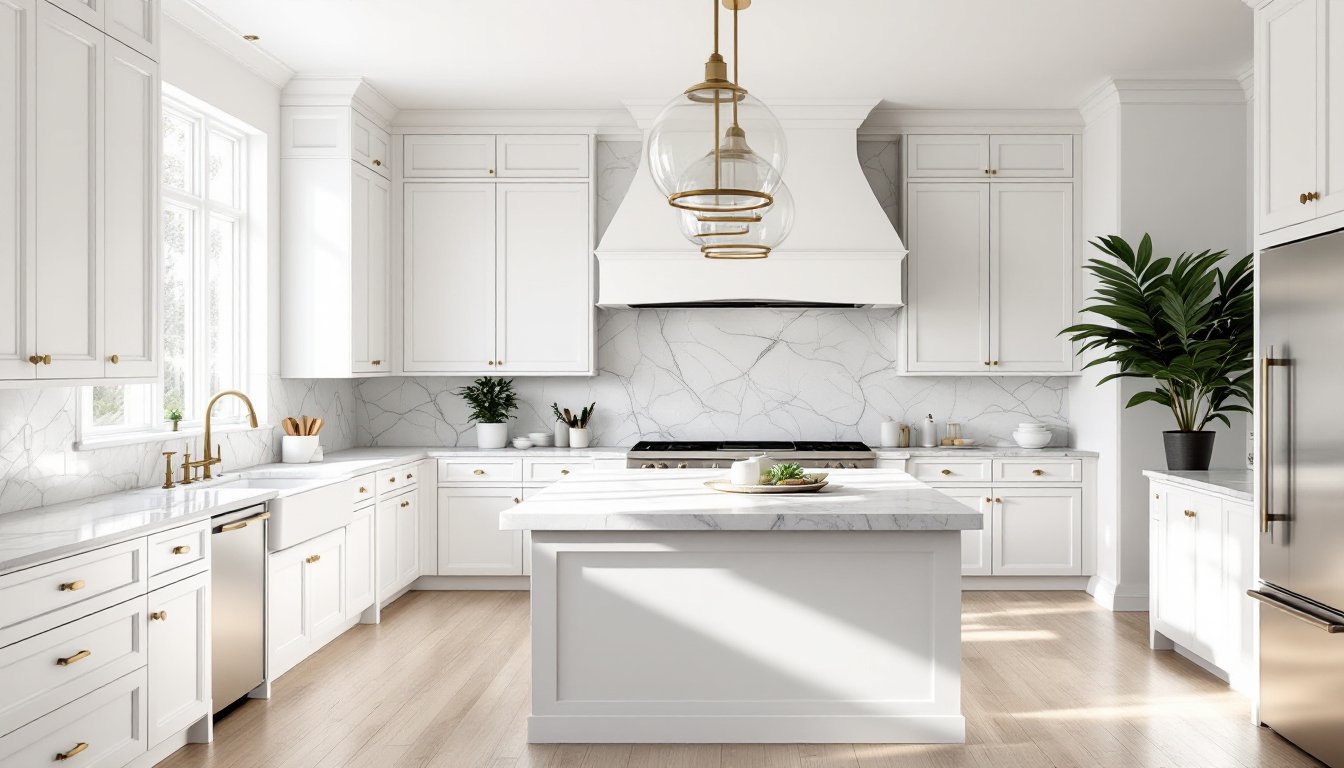
White kitchens have long held their place at the top of luxury design, and that’s not changing in 2026. Done right, a white kitchen doesn’t feel sterile or cold, it’s a sophisticated canvas that lets high-end materials, precise craftsmanship, and thoughtful lighting take center stage. Whether someone’s planning a full remodel or looking to upgrade existing finishes, understanding what separates a builder-grade white kitchen from a truly luxurious one comes down to material choices, layered textures, and the small details that cost more upfront but deliver lasting value.
Table of Contents
ToggleKey Takeaways
- A luxury white kitchen prioritizes premium materials like solid wood cabinetry, natural stone countertops, and catalyzed lacquer finishes that resist yellowing and provide lasting durability over trendy alternatives.
- Layered lighting with recessed LEDs, under-cabinet strips (2700K–3000K), and statement pendants positioned 30–36 inches above countertops is essential to prevent shadows and highlight architectural details in a white kitchen design.
- Warmer white paint tones like Benjamin Moore White Dove and Sherwin-Williams Alabaster with cream or gray undertones replaced stark blue-whites in 2026, offering a softer appearance that feels more sophisticated and inviting.
- Budget-conscious homeowners can achieve a high-end white kitchen aesthetic by investing in quality paint and hardware upgrades, then strategically splurging on a premium faucet and stone countertop that deliver daily value and visual impact.
- Texture and depth prevent an all-white kitchen from feeling sterile—incorporate natural wood tones, warm metallics like aged brass, woven textures, and greenery to create visual interest while maintaining elegance.
Why White Kitchens Remain the Pinnacle of Luxury Design
White kitchens work because they’re fundamentally versatile. They amplify natural light, make small spaces feel larger, and provide a neutral backdrop that won’t compete with statement pieces like a La Cornue range or a custom island made from book-matched marble.
From a resale perspective, white kitchens appeal to the widest buyer pool. Real estate agents consistently report that neutral palettes, especially white, help homes move faster and often command higher offers. That’s not subjective taste: it’s market data.
But the real appeal for homeowners isn’t just resale value. It’s longevity. Trendy colors date quickly. A white kitchen built with quality materials can look current for decades with minimal updates. Swap out hardware, update lighting, or change window treatments, and the space feels fresh again without ripping out cabinetry.
White also highlights craftsmanship. When cabinets are painted a bold color, joinery details and panel profiles get lost. In white, every reveal, every mortise-and-tenon joint, every flush inset door becomes visible. That’s why luxury interior designs often lean into white, it puts the focus on execution, not distraction.
Essential Elements of a Luxury White Kitchen
Premium Materials and Finishes
Luxury starts with substrate and surface. Solid wood face frames (not MDF with a veneer), plywood box construction, and dovetailed drawers with soft-close undermount slides separate high-end cabinetry from stock options. Paint finish matters too, look for conversion varnish or catalyzed lacquer, which cure harder and resist yellowing better than standard latex.
For countertops, natural stone remains the gold standard. Carrara, Calacatta, and Statuario marble each have distinct veining, and slabs should be selected in person to ensure continuity across seams. Quartzite (not to be confused with engineered quartz) offers marble’s look with better stain resistance, though it still needs sealing. If durability trumps everything, porcelain slabs like those from Neolith or Dekton mimic stone perfectly and handle heat, scratches, and acids without flinching.
Backsplashes can be full-height slabs with book-matched veining, classic 3×6-inch beveled subway tile with a stacked or offset bond (not the dated running bond), or even Thassos marble mosaics with polished brass inlay. Whatever the choice, grout lines should be minimal, 1/16-inch unsanded grout for tight spacing, and sealed properly to prevent discoloration.
Flooring should anchor the space. Wide-plank white oak (7-inch or wider) with a matte or satin finish in a light stain warms up an all-white palette. Large-format porcelain tile (24×24-inch or larger) in a honed or matte finish keeps maintenance low and works well with radiant heat.
Statement Lighting and Hardware
Lighting layering is non-negotiable in a luxury kitchen. Start with recessed LED downlights on a dimmer, space them roughly 4 feet apart to avoid hot spots. Add under-cabinet LED strips with a color temperature around 2700K to 3000K to reduce shadows on countertops and highlight backsplash details.
Pendant lights over an island should make a statement without blocking sightlines. Oversized glass globes, geometric brass frames, or hand-blown art glass all work, but hang them 30 to 36 inches above the countertop to keep them functional. If the island is longer than 8 feet, use three pendants instead of two to maintain visual balance.
Hardware is where many DIYers underestimate impact. Swap builder-grade pulls for unlacquered brass (which patinas over time), polished nickel, or matte black stainless steel. Cabinet pulls should be 3 to 5 inches center-to-center for drawers, and knobs work better on doors. For a seamless look, consider integrated pulls routed directly into cabinet doors and drawer fronts, this requires precision but eliminates hardware entirely and reads extremely high-end.
Top Design Trends for Luxury White Kitchens in 2026
In 2026, luxury white kitchens are embracing warmer whites, not the stark, blue-toned whites of the 2010s. Think Benjamin Moore White Dove, Sherwin-Williams Alabaster, or Farrow & Ball Pointing. These have subtle cream or gray undertones that feel softer in both natural and artificial light.
Integrated appliances continue to dominate. Panel-ready refrigerators, dishwashers, and even range hoods that disappear behind cabinetry create a furniture-like appearance. Brands like Sub-Zero, Miele, and Thermador all offer flush-inset panels that align perfectly with surrounding cabinetry.
Sculptural range hoods are replacing basic stainless steel boxes. A plaster or limewash hood with a curved or coved profile brings Old World craftsmanship into a modern layout. Alternatively, a slab stone or quartz hood cantilevered from the wall acts as both function and focal point.
Open shelving isn’t disappearing, but it’s getting more intentional. Instead of floating pine boards, luxury homes showcase thick solid marble shelves with concealed steel brackets or blackened steel floating frames with integrated LED lighting behind glassware.
Finally, oversized islands are trending even larger, 10 to 12 feet long with seating for five or more. These often include waterfall edges, where countertop material wraps down both ends of the island. It’s a detail that uses more material and requires precise fabrication, which is exactly why it signals luxury.
How to Add Warmth and Depth to an All-White Kitchen
An all-white kitchen risks feeling flat if it doesn’t incorporate texture and tonal variation. Start with different sheens, matte cabinetry, honed stone counters, and a polished tile backsplash create visual interest without introducing color.
Natural wood tones are the easiest way to add warmth. Use wood for open shelving, a kitchen table, bar stools, or even a butcher block inset in the island. White oak, walnut, or reclaimed pine all contrast beautifully against white without feeling heavy.
Woven textures also help. Consider natural fiber bar stools with rattan seats, a jute rug under the table (properly sealed against spills), or linen Roman shades instead of wood blinds.
Warm metallics like brass, bronze, or aged copper bring in subtle color while maintaining elegance. Use these finishes for faucets, cabinet hardware, and lighting fixtures. Mixing metals, say, polished nickel on cabinet knobs and aged brass on pendant lights, adds another layer of depth, as long as finishes are intentionally distributed and not random.
Don’t overlook plants and greenery. A row of potted herbs on a windowsill, a large fiddle leaf fig in a corner, or even fresh eucalyptus in a vase breaks up white expanses with organic shapes and living color.
Finally, resist the urge to use pure white everywhere. Introduce off-white or greige on walls or ceilings to create subtle contrast against bright white cabinetry. The difference is small but noticeable, and it prevents that dental-office glare many all-white kitchens suffer from.
Budget-Friendly Ways to Achieve a High-End White Kitchen Look
A luxury aesthetic doesn’t always require luxury pricing, if priorities are set correctly and the work is clean.
Start with paint. If existing cabinets are solid wood or plywood with a good structure, a professional paint job can transform them. Use a bonding primer like Benjamin Moore Advance or Sherwin-Williams ProClassic, then two coats of a durable satin or semi-gloss white paint. Spray application gives a smoother finish than brushing or rolling, but it requires masking off the entire kitchen and proper ventilation.
Upgrade hardware across all cabinets and drawers. Switching from builder chrome pulls to brushed brass or matte black costs $3 to $8 per piece but delivers immediate visual impact. Buy in bulk online for better pricing than big-box retailers.
Replace just the countertop and backsplash. Leave cabinets intact and invest in a quartz countertop with subtle veining, brands like Cambria, Silestone, or even some Ikea-partnered fabricators offer quality slabs at mid-range pricing. Pair it with a simple white subway tile backsplash installed to the ceiling for a clean, cohesive look. DIYers comfortable with tile can handle this job over a weekend using premixed thin-set and a wet tile saw (rent one for under $50/day).
Swap outdated lighting. Replacing a single flush-mount ceiling fixture with a statement pendant or adding under-cabinet LED tape lighting costs under $200 in materials but dramatically improves both function and style. For under-cabinet lights, hardwiring is ideal, but plug-in options work fine if outlets are accessible.
If the budget allows one splurge, put it into the faucet. A high-quality pull-down faucet in a stylish finish from Kohler, Delta, or Brizo costs $300 to $600 and gets used dozens of times daily. Cheap faucets leak, drip, and look dated quickly.
Finally, consider painting or refinishing existing flooring rather than replacing it. White oak floors that are currently stained dark can be sanded and finished with a light stain or natural matte poly for a fresher look. This costs a fraction of new flooring and pairs perfectly with a white kitchen refresh.
For those designing luxury house plans from scratch or doing a gut renovation, allocating budget toward quality cabinetry construction and stone surfaces will provide better long-term value than spending on trendy appliances or elaborate tile patterns. Timeless materials outlast fads, and white kitchens built on solid fundamentals continue to impress long after installation.
Whether someone’s working with a contractor or tackling updates themselves, the key to a luxury white kitchen isn’t just choosing white, it’s layering quality materials, balancing textures, and executing every detail with precision. When those elements align, the result is a kitchen that doesn’t just follow a trend, it sets the standard.