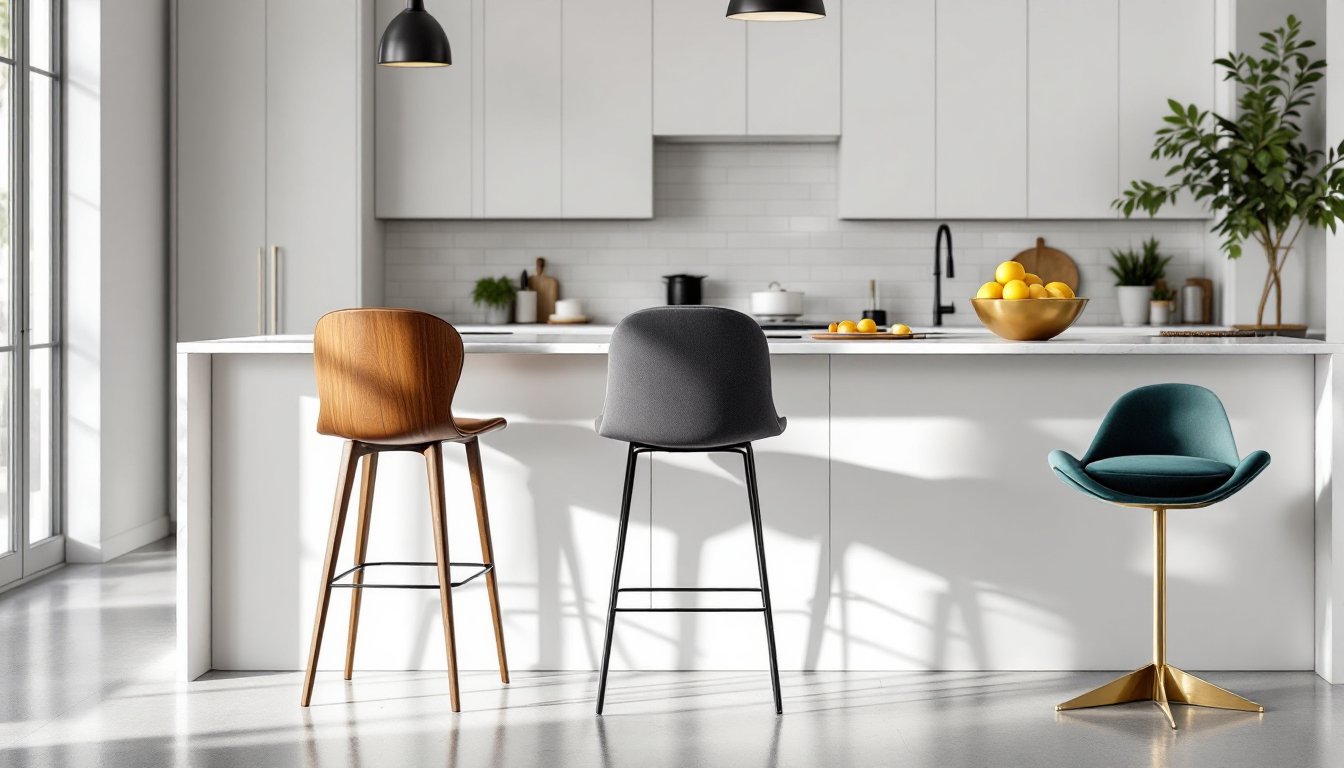
Bar stools aren’t just extra seating, they’re the bridge between function and statement-making design. In 2026, luxury modern kitchen bar stools have evolved beyond simple perches into sculpted pieces that anchor a kitchen’s aesthetic. Whether someone’s renovating a dated breakfast bar or designing a brand-new entertaining space, the right stool transforms a kitchen island from utilitarian to unforgettable. This guide walks through what separates high-end options from budget knockoffs, the materials that justify premium pricing, and how to choose stools that work as hard as they look.
Table of Contents
ToggleKey Takeaways
- Luxury modern kitchen bar stools are defined by construction quality—solid hardwood frames, reinforced joints, and premium materials like full-grain leather or performance fabrics rated 30,000+ double rubs—not inflated price tags.
- Counter-height stools (24–26 inches) work with standard 36-inch counters, while bar-height stools (28–30 inches) pair with 42-inch raised bars, with proper spacing of 26–30 inches per stool preventing cramped layouts.
- Top materials for longevity include kiln-dried hardwoods like walnut and white oak, powder-coated steel with 14–16 gauge thickness, and performance fabrics like Crypton that resist spills in high-traffic kitchens.
- Comfort features that justify investment include contoured seats with 14–18 inch depth, low backrests (8–12 inches) for lumbar support, footrests positioned 8–10 inches below seats, and high-density foam (2.0+ lbs/cubic foot) that resists compression.
- Match stools to your kitchen aesthetic by coordinating metal finishes with existing hardware, echoing cabinet and island materials, and choosing styles that complement rather than compete with backsplash patterns and countertop designs.
- Adjustable gas-lift stools with Class 4 cylinders rated 300+ pounds and sealed ball-bearing swivels offer durability and convenience, while statement pieces work best sparingly—two stools at a peninsula, not four crowded around an island.
What Defines a Luxury Modern Bar Stool?
Luxury in bar stools isn’t about logos or inflated price tags. It’s about construction quality, material integrity, and design precision.
High-end stools feature kiln-dried hardwood frames or powder-coated steel bases with reinforced joints, not particle board or spot-welded tubing. Welds should be smooth and continuous. Wood joints use mortise-and-tenon or dowel construction, not just screws and glue.
Upholstery matters. Premium stools use top-grain or full-grain leather, not bonded scraps. Fabric options lean toward performance weaves with 30,000+ double-rub counts (Martindale or Wyzenbeek ratings), ensuring they survive daily use without pilling or tearing.
Hardware separates luxury from budget. Footrests should be stainless steel or brass, not chrome-plated plastic. Swivel mechanisms use ball-bearing assemblies, not cheap friction discs. Gas-lift cylinders in adjustable models carry BIFMA certification for load capacity and durability.
Finishes are hand-applied, not sprayed in bulk. Look for multi-stage lacquers, hand-rubbed oils, or electroplated metal finishes that won’t chip after six months.
Weight tells a story. A quality modern bar stool weighs 15–25 pounds, not 8. Heft indicates solid materials and robust engineering.
Top Materials for High-End Kitchen Bar Stools
Material choice defines both longevity and visual impact. Here’s what holds up in real kitchens.
Solid Hardwood
Walnut, oak, and ash dominate luxury modern designs. Walnut offers rich, dark grain: white oak brings lighter tones with pronounced figure. Avoid veneered plywood, it chips and delaminates near edges. Solid wood frames should have a moisture content of 6–8% to prevent warping in climate-controlled homes.
Metal: Steel and Brass
Powder-coated steel provides industrial strength with scratch resistance. Look for frames with 14–16 gauge wall thickness, anything thinner flexes under load. Brushed or blackened steel finishes hide fingerprints better than polished chrome.
Solid brass or brass-plated steel adds warmth. Raw brass develops patina: lacquered brass stays bright. Expect brass stools to weigh more, a sign of genuine material, not hollow tubing.
Upholstery: Leather and Performance Fabrics
Full-grain leather ages gracefully, developing character rather than looking worn. Aniline-dyed hides show natural grain but stain easily: semi-aniline finishes add protection without sacrificing texture.
Performance fabrics like Crypton, Sunbrella, or Revolution resist spills and UV fading. These are practical for high-traffic kitchens where red wine and coffee are constants.
Solid Surface and Stone
Some high-end designs incorporate marble, concrete, or resin seats. These deliver sculptural presence but add weight, expect 30+ pounds per stool. They also require slip-resistant finishes or leather pads to prevent sliding.
Avoid faux materials marketed as “vegan leather” or “wood-look composite” unless the manufacturer discloses exact composition and durability testing.
Choosing the Perfect Height and Size
Getting dimensions wrong turns even designer stools into awkward garage-sale candidates. Measure before buying.
Counter-Height vs. Bar-Height
Standard kitchen counters sit at 36 inches. Counter-height stools measure 24–26 inches from floor to seat, leaving 10–12 inches of clearance for knees and thighs.
Kitchen islands with raised bars typically stand 42 inches high. Bar-height stools run 28–30 inches to the seat, maintaining that critical 10–12-inch gap.
Measure the underside of the countertop or bar overhang, not the top surface. Account for apron thickness if the island has decorative trim underneath.
Seat Width and Spacing
Luxury stools range from 16–22 inches wide. Wider seats offer comfort but consume real estate. Allow 26–30 inches of space per stool along the bar to prevent elbow-jostling. A 60-inch island comfortably seats two stools: 90 inches fits three.
Stools with arms need more room, 28–32 inches per seat. Arms should tuck completely under the counter when pushed in, or they’ll block pathways.
Depth and Overhang
Seats measure 14–18 inches deep. Pair them with countertop overhangs of at least 12 inches for knee clearance. If the overhang is only 9 inches, stools won’t tuck in properly, leaving the kitchen feeling cramped.
Adjustable Models
Gas-lift stools offer 6–8 inches of height adjustment, useful for multi-function islands or households with varied user heights. Quality models use Class 4 gas cylinders rated for 300+ pounds and 50,000+ cycles.
Test the adjustment mechanism in person. Cheap levers stick or require standing to operate: premium versions adjust smoothly with one hand while seated.
Design Styles That Command Attention
Luxury modern bar stools span aesthetics from minimalist to maximalist. Here’s what defines each.
Mid-Century Modern
Think tapered walnut legs, molded plywood seats, and low-profile silhouettes. Iconic designs reference Eames, Wegner, and Saarinen. Look for reproductions with solid walnut or ash, not stained rubberwood. Authentic mid-century geometry features gentle curves and organic shapes, not sharp angles.
Industrial Minimalist
Exposed metal frames in matte black or raw steel pair with leather or reclaimed wood seats. Welds are visible and intentional. Footrests double as structural cross-bracing. This style works in lofts, transitional kitchens, or spaces with exposed ductwork. Heavyweight construction is essential, flimsy industrial stools look like waiting-room furniture.
Scandinavian Clean Lines
Light woods (white oak, beech) meet pale upholstery or natural linen. Designs emphasize negative space and understated joinery. Legs taper subtly: backs curve just enough for lumbar support without dominating sightlines. These stools integrate seamlessly into modern kitchen layouts focused on airy, uncluttered aesthetics.
Sculptural Statement Pieces
These stools function as furniture art. Expect cantilevered seats, asymmetric bases, or mixed materials like brushed brass with marble. Designers like Tom Dixon and Kelly Wearstler lead this category. These pieces demand space, they look cramped when clustered. Use them sparingly: two statement stools at a peninsula, not four crammed around an island.
Art Deco Revival
Velvet upholstery in jewel tones, brass accents, and geometric patterns define this resurgence. Channel tufting, nailhead trim, and fluted legs add texture. These stools pair with bold backsplashes and high-gloss cabinetry but clash with rustic or farmhouse elements.
Whichever style resonates, ensure it complements existing finishes. A brass-and-marble stool fights against oil-rubbed bronze hardware and butcher-block counters.
Comfort Features Worth the Investment
Luxury stools should support 30-minute conversations, not just quick snacks. These features separate endurance from discomfort.
Contoured Seats
Flat seats create pressure points. Look for subtle concave shaping or waterfall edges that slope downward at the front, reducing thigh compression. Molded plywood or injection-molded polymer seats outperform flat slabs.
Seat depth matters. Anything under 14 inches forces perching: over 18 inches leaves shorter users with unsupported legs dangling.
Backrests and Lumbar Support
Backless stools suit quick meals but fatigue during extended use. Low backs (8–12 inches tall) provide lumbar contact without obstructing sightlines. Full-height backs (18+ inches) offer maximum support but visually segment open-plan spaces.
Backrest angle should recline 5–10 degrees from vertical. Perfectly upright backs feel stiff: excessive recline makes leaning forward to eat awkward.
Footrests
A footrest prevents leg fatigue by supporting weight distribution. It should sit 8–10 inches below the seat and run the full width of the stool base. Round footrests (common on swivel stools) work for any foot position: straight bars require deliberate foot placement.
Test footrest height while seated. Knees should bend at roughly 90 degrees when feet rest comfortably.
Swivel Mechanisms
Swivels add convenience in active kitchens but introduce wear points. Quality models use sealed ball bearings and 360-degree rotation with return-to-center springs. Cheap mechanisms wobble or freeze after a year.
Some swivels include memory return, automatically centering the seat when vacated, useful for maintaining visual order.
Cushioning
High-density foam (2.0+ lbs/cubic foot) maintains shape for years. Cheap foam compresses into pancakes within months. Leather or vinyl upholstery should have 5mm+ padding, not just fabric stretched over hard shells.
For extended comfort, consider stools with coil springs under foam layers, mimicking quality upholstered furniture.
How to Match Bar Stools with Your Kitchen Aesthetic
Bar stools should bridge the kitchen’s existing design language, not fight it. Here’s how to integrate them cohesively.
Coordinate Metal Finishes
Match stool bases to predominant hardware and fixture finishes. Brushed nickel cabinet pulls call for chrome or brushed steel stools, not oil-rubbed bronze. Mixed metals work if intentional, warm brass stools can accent a primarily stainless kitchen as long as one other element (lighting, faucet) shares that brass tone.
Echo Cabinet and Island Materials
Walnut stool legs complement walnut cabinetry or floating shelves. White oak stools harmonize with oak flooring. This doesn’t mean everything matches exactly, tonal variation within the same wood species adds depth without monotony.
For painted cabinets, consider stools in complementary neutrals. Navy cabinets pair with charcoal upholstery or natural wood: white kitchens handle bold jewel tones or black frames.
Balance Visual Weight
Heavy, dark islands demand stools with presence, solid wood or thick metal frames. Delicate glass or acrylic islands call for slimmer, airy designs. Designers featured in high-end spaces often use this principle to maintain proportional balance across sight lines.
Consider Backsplash and Countertop Patterns
Busy backsplashes (Moroccan tile, bold stone) benefit from simple, solid-colored stools. Conversely, minimalist white subway tile and quartz counters can handle patterned upholstery or sculptural frames without visual overload.
Scale Appropriately
In compact kitchens, choose stools with open bases and slim profiles to preserve sightlines. Bulky stools make small spaces feel cramped. Large, open-plan kitchens can accommodate heavier, more substantial designs without overwhelming the room.
Test in Context
If possible, bring samples or use painter’s tape on the floor to mock up stool footprints. Lighting changes how finishes read, brushed brass looks warm under incandescent bulbs but greenish under cool LED task lighting.
Some retailers and design resources offer AR apps or visualizers to preview stools in situ before purchasing. Use them, especially for statement pieces with bold colors or unusual shapes.
Conclusion
Luxury modern kitchen bar stools are investments that shape daily routines and social dynamics. Quality construction, thoughtful materials, and precise sizing turn functional seating into design anchors. Prioritize comfort features that match actual usage, coordinate finishes with existing elements, and choose styles that enhance rather than compete with the kitchen’s architecture. Done right, the right stools elevate a kitchen from serviceable to exceptional, and hold up through years of assignments sessions, morning coffee, and impromptu gatherings.